Table of content
A motorcycle crash happens fast. One second you are riding through Southern California traffic, scanning mirrors and feeling the road. The next, you are on the pavement, adrenaline surging, unsure what just happened.
What you do in the hours and days that follow can shape your entire motorcycle accident case.
At Shark Law Motorcycle Attorneys, founding partner Robert Vetchtein has spent more than 20 years representing injured riders across Southern California.
“The insurance company starts building its defense immediately. Riders need to start protecting their case just as quickly.”
This article explains the most common mistakes riders make after a crash and how those mistakes can quietly damage a motorcycle accident claim.
What You Should Know
Motorcycle accident cases are different from car accident claims.
Riders face bias. Insurance companies often assume speed, recklessness, or lane splitting automatically caused the crash. California’s comparative fault laws allow insurers to reduce compensation if they assign even partial blame.
Small missteps matter.
A motorcycle accident lawyer evaluates not only how the crash occurred, but how post-crash decisions affect liability, medical documentation, and insurance negotiations.
Even a single social media post or recorded statement can complicate a motorcycle accident lawsuit.
Why This Matters
A motorcycle accident claim is built on evidence. Medical records, crash reports, witness statements, helmet use, and traffic laws all play a role.
If evidence is lost or statements are inconsistent, insurance carriers use that against you.
“The more serious the injury, the harder the insurance company fights. That is why protecting your case from day one is critical.”
Severe injuries often mean longer recovery times and higher financial stakes, increasing the importance of strategic case protection.
Who Is Affected
These mistakes affect:
- Riders with serious injuries
- Riders who believe they were partially at fault
- Riders involved in lane splitting collisions
- Riders dealing with aggressive insurance adjusters
- Families pursuing wrongful death claims
Even experienced riders can unknowingly damage their own motorcycle accident case.
When This Becomes a Legal Issue
A crash becomes a legal issue when:
- Fault is disputed
- Insurance coverage is limited
- Injuries require ongoing treatment
- The other driver blames the rider
- Social media posts contradict injury claims
California follows pure comparative negligence. If you are found 30% at fault, your recovery is reduced by 30%. That makes careful documentation and strategy essential.
Common Issues Involved
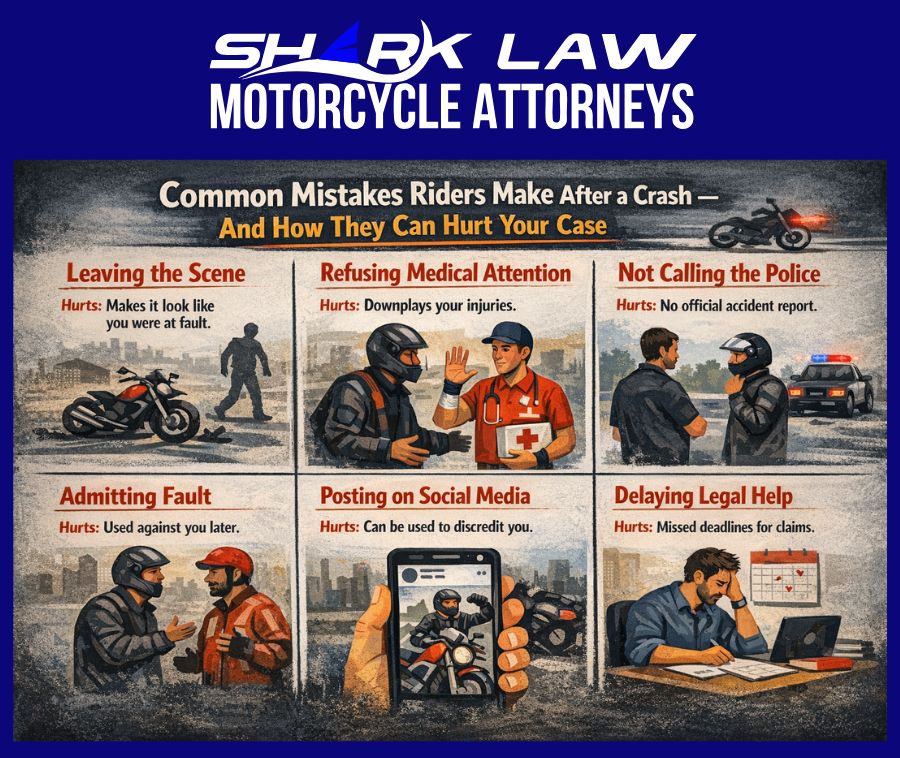
Common Post-Crash Mistakes
Admitting fault at the scene
Even saying “I didn’t see you” can later be framed as an admission of liability.
Failing to seek immediate medical care
Delayed treatment allows insurers to argue injuries were minor or unrelated.
Giving a recorded statement too soon
Insurance adjusters ask leading questions designed to reduce payout value.
Posting on social media
Photos of you standing, smiling, or attending events can be used to challenge injury severity.
Not preserving evidence
Damaged helmets, riding gear, and motorcycle components may prove impact severity.
Common Injuries
- Traumatic brain injuries
- Spinal cord injuries
- Road rash with infection risk
- Complex fractures
- Internal organ damage
These injuries often require long-term treatment, making fair compensation critical.
Fault, Liability, and Insurance Considerations
Lane splitting is legal in California. However, insurers frequently argue unsafe speed or positioning.
California requires DOT-approved helmets. Noncompliance may influence comparative fault arguments, especially in head injury cases.
Insurance carriers analyze:
- Police report wording
- Timing of medical treatment
- Witness consistency
- Rider statements
- Surveillance or traffic footage
A seasoned motorcycle accident attorney anticipates these tactics and counters them strategically.
What to Do After a Motorcycle Accident
- Call emergency services and ensure a report is filed
- Seek medical care immediately, even if symptoms feel minor
- Document the scene with photos and video
- Collect witness contact information
- Preserve your helmet and riding gear
- Avoid detailed statements to insurance adjusters
- Contact a motorcycle accident lawyer before signing anything
“Your focus should be healing. Let your attorney handle the strategy.”
How a Motorcycle Accident Lawyer Can Help
Legal representation includes:
- Independent accident investigation
- Coordination with medical specialists
- Negotiation with insurance carriers
- Litigation preparation when necessary
- Strategic management of comparative fault issues
A rider-first perspective strengthens the claim from the start.
FAQs
- What should I not say after a motorcycle accident?
- Avoid admitting fault or speculating about what happened. Do not provide recorded insurance statements without legal advice.
- Can social media hurt my motorcycle accident case?
- Yes. Public posts may be used to question your injuries or credibility.
- Should I speak to the other driver’s insurance company?
- Not before consulting a motorcycle accident attorney.
- How long do I have to file a motorcycle accident lawsuit in California?
- Generally two years from the crash date, with shorter deadlines in certain cases.
- Does lane splitting automatically make me at fault?
- No. Lane splitting is legal in California. Fault depends on surrounding circumstances.
- When should I hire a motorcycle accident lawyer?
- As soon as possible after the crash to preserve evidence and protect your claim.
Get the Guidance Riders Deserve
After a crash, small decisions can carry long-term consequences. Protecting your motorcycle accident case requires experience and strategy.
Get a Free Consultation with Shark Law Motorcycle Attorneys today. Talk to a motorcycle accident attorney who understands riders and protects your rights.