Table of content
- Introduction
- What You Should Know
- Why This Matters
- Who Is Affected
- When This Becomes a Legal Issue
- Common Issues Involved
- Fault, Liability, and Insurance Considerations
- What to Do After a Motorcycle Accident
- How a Motorcycle Accident Lawyer Can Help
- Frequently Asked Questions
- Get a Free Consultation
- 150 Character Excerpt
- Instagram Caption
Does Lane Splitting Automatically Make the Motorcyclist at Fault?
Introduction
If you’ve been in a motorcycle accident while lane splitting, you’ve probably heard the same question from someone at the scene.
“Weren’t you lane splitting?”
For many riders, that question quickly turns into another concern.
“Does that mean the accident was automatically my fault?”
The answer is no.
Lane splitting is legal in California, but many drivers, and even some insurance adjusters, misunderstand how the law actually works.
At Shark Law Motorcycle Attorneys, we’ve represented riders involved in lane splitting accidents throughout Southern California. One of the biggest misconceptions we see is the belief that simply riding between lanes makes a motorcyclist responsible for every collision.
Founding Partner Robert Vetchtein explains, “Being lane splitting does not automatically make you negligent. Just like any other traffic accident, the facts determine fault.”
Understanding those facts is essential if you’ve been injured.
What You Should Know
California is the only state that has formally recognized lane splitting as a legal riding practice.
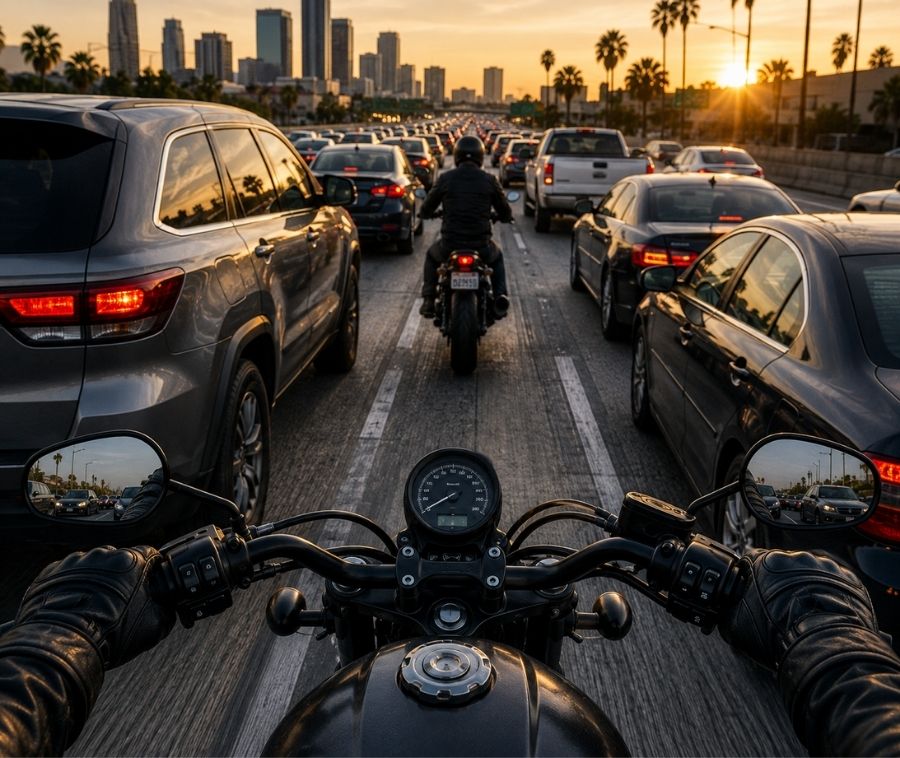
Lane splitting occurs when a motorcycle travels between rows of stopped or slow-moving vehicles traveling in the same direction.
However, legal does not mean unlimited.
Riders are still expected to:
- Operate safely
- Travel at a reasonable speed
- Adjust for traffic conditions
- Exercise good judgment
Drivers also have responsibilities.
Motorists must:
- Check mirrors before changing lanes
- Signal lane changes
- Avoid intentionally blocking motorcycles
- Maintain awareness of surrounding traffic
Both parties have legal duties on the roadway.
Why This Matters
Insurance companies frequently try to use lane splitting as an excuse to reduce or deny motorcycle accident claims.
They may argue:
- Lane splitting is dangerous
- The rider should have anticipated the driver’s actions
- The motorcycle was traveling too fast
- The driver could not reasonably see the motorcycle
These arguments are not automatic proof of fault.
Robert Vetchtein explains, “The question isn’t whether the rider was lane splitting. The question is whether everyone involved acted reasonably under the circumstances.”
That distinction often determines the outcome of a case.
Who Is Affected
Lane splitting accidents commonly involve:
- Daily commuters
- Freeway riders
- Rush-hour traffic
- Southern California urban riders
- Experienced motorcyclists
- New riders navigating congestion
Heavy traffic throughout Los Angeles, Orange County, San Diego, Riverside, and surrounding areas makes lane splitting a routine part of riding for thousands of California motorcyclists.
When This Becomes a Legal Issue
Lane splitting becomes a legal issue when fault is disputed.
Common examples include:
Unsafe Lane Changes
A driver changes lanes without checking mirrors or blind spots and collides with a motorcycle.
Sudden Door Opening
A vehicle occupant opens a door into the rider’s path.
Aggressive Driving
A driver intentionally blocks or crowds a rider.
Excessive Rider Speed
A rider travels significantly faster than surrounding traffic and cannot avoid a collision.
Each situation requires an independent investigation.
No single rule determines liability.
Common Issues Involved
Causes
Many lane splitting accidents are caused by driver behavior.
Common causes include:
- Failure to check mirrors
- Unsafe lane changes
- Distracted driving
- Following too closely
- Aggressive driving
- Road rage
Motorcyclists may also contribute by:
- Traveling too fast for traffic conditions
- Weaving unpredictably
- Lane splitting in unsafe situations
Each case depends on its specific facts.
Injuries
Lane splitting accidents often result in serious injuries because there is little room to avoid impact.
Common injuries include:
- Broken bones
- Shoulder injuries
- Wrist injuries
- Leg injuries
- Head injuries
- Road rash
- Neck and back injuries
Even relatively low-speed crashes can cause significant trauma.
Fault, Liability, and Insurance Considerations
California follows a comparative negligence system.
This means fault can be shared between multiple parties.
For example:
- A driver changes lanes without signaling.
- A rider is lane splitting but traveling faster than surrounding traffic.
- A jury may determine both parties contributed to the collision.
That does not automatically prevent the rider from recovering compensation.
Instead, damages may be reduced based on the rider’s percentage of fault.
Insurance companies often attempt to increase the rider’s percentage of responsibility because doing so reduces what they have to pay.
A motorcycle accident attorney can investigate:
- Vehicle positions
- Traffic conditions
- Witness statements
- Surveillance footage
- Helmet camera recordings
- Police reports
- Motorcycle damage
Robert Vetchtein explains, “Every lane splitting accident deserves an objective investigation, not assumptions based on outdated stereotypes about motorcyclists.”
What to Do After a Motorcycle Accident
If you’ve been involved in a lane splitting accident:
- Call 911
- Request law enforcement
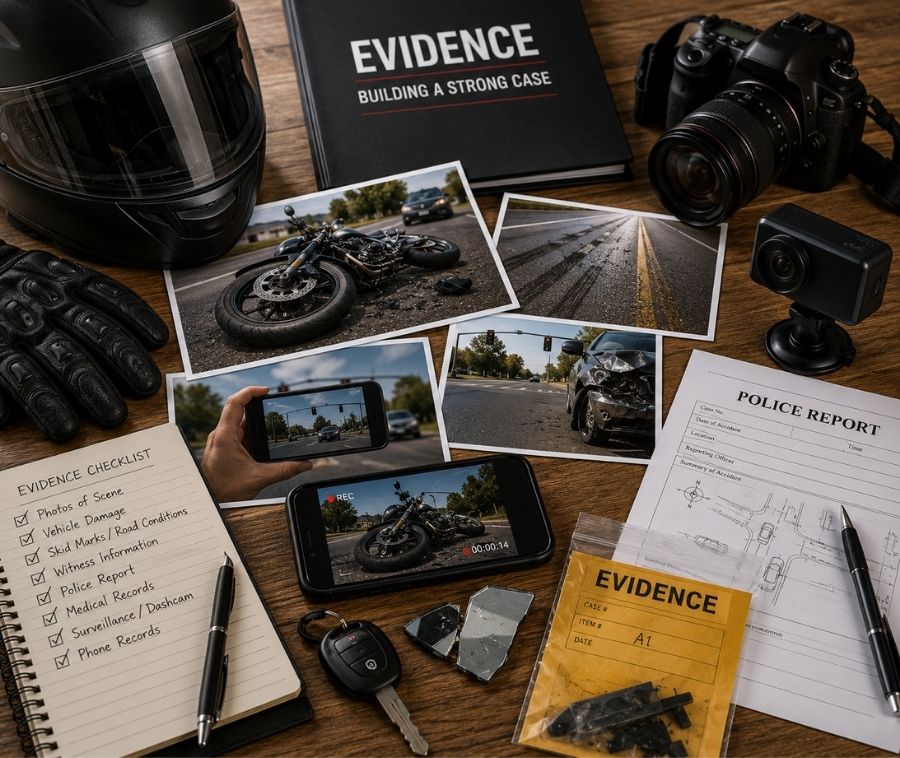
- Photograph the accident scene
- Take pictures of vehicle positions
- Preserve helmet camera footage
- Obtain witness contact information
- Seek immediate medical treatment
- Avoid discussing fault at the scene
- Contact a motorcycle accident lawyer in California
The more evidence preserved early, the stronger your case may become.
How a Motorcycle Accident Lawyer Can Help
Lane splitting cases often require a detailed legal investigation.
At Shark Law Motorcycle Attorneys, we help riders by:
- Investigating the crash
- Preserving evidence
- Obtaining traffic camera footage
- Interviewing witnesses
- Working with accident reconstruction experts
- Negotiating with insurance companies
- Fighting for maximum compensation
Because Shark Law understands both California law and motorcycle culture, we know how to challenge unfair assumptions made against riders.
Frequently Asked Questions
- Is lane splitting legal in California?
- Yes. California is the only state that specifically recognizes lane splitting as legal.
- Does lane splitting automatically make me at fault?
- No. Fault depends on the actions of everyone involved in the accident.
- Can I still recover compensation if I was lane splitting?
- Yes. California’s comparative negligence laws may still allow you to recover damages.
- Can the insurance company blame me just because I was lane splitting?
- They may try, but lane splitting alone does not determine legal responsibility.
- Should I hire a motorcycle accident attorney after a lane splitting accident?
- Absolutely. These cases often involve complex liability issues and require experienced legal representation.
Get a Free Consultation
If you’ve been injured while lane splitting, don’t assume you’re automatically at fault.
California law protects riders, and every accident deserves a complete investigation.
Talk to a motorcycle accident attorney who understands California law, understands motorcycle culture, and knows how to protect your rights.
Contact Shark Law Motorcycle Attorneys today for a free consultation.
If you’re ready to speak to a motorcycle attorney who is also a rider, we are by your side.
150 Character Excerpt
Lane splitting is legal in California. Learn why it does not automatically make a motorcyclist at fault after an accident.
Instagram Caption
One of the biggest myths in motorcycling…
“If you were lane splitting, the accident is automatically your fault.”
False.
California law is much more nuanced than that.
Every accident depends on the facts.
Learn your rights before believing the insurance company’s version of the story.
Visit the link in our bio to learn more.